

Introduction
“I don’t like my smile.”
It sounds specific, but usually, it is not.
Ask the person what feels wrong, and the answer may take a moment.
- Maybe the teeth look too yellow.
- One front tooth sits slightly farther forward.
- A chipped edge catches the eye in photographs.
- There is a small gap that suddenly seems impossible to ignore.
Or perhaps the patient cannot identify one thing at all. They just know the smile does not feel right.
This is where cosmetic dentistry can become confusing. When several treatments are available, it is easy to assume that improving a smile requires changing everything at once.
A single dark tooth can make the entire smile feel uneven. A chipped front edge can create an asymmetry the patient notices in every photo. Generalized yellowing may make otherwise healthy, well-shaped teeth feel less attractive.
For patients researching cosmetic dentistry in Taylor, TX, this is an important starting point. Cosmetic treatment should not begin with a menu of procedures. Therefore, this blog takes a closer look at the different aspects of cosmetic dental treatments available in the area. Let’s get started.
A Better Smile Does Not Always Require More Treatment
Cosmetic dentistry is often presented through dramatic transformations.
The before photo looks completely different from the after photo. Every visible tooth appears brighter, straighter, and more uniform.
Those cases certainly exist.
But they can create the impression that meaningful cosmetic improvement always requires extensive treatment.
It does not.
The visual impact of a smile depends on how different features relate to one another. Color, shape, spacing, alignment, symmetry, tooth proportions, and existing restorations can all influence what the eye notices.
How Is a Cosmetic Treatment Plan Developed?
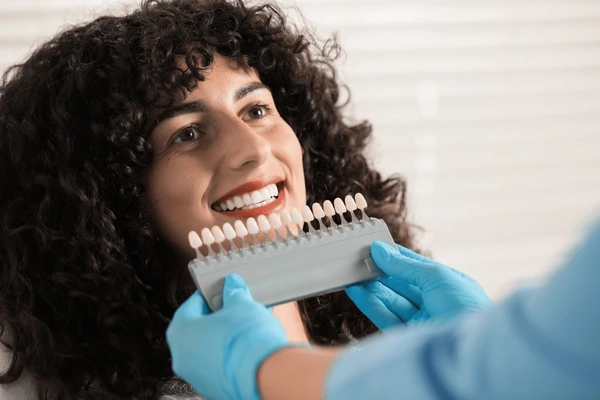
1. Discussing the problems faced by the patient
It starts with the patient’s view.
- What appears to be wrong?
- When did it appear?
- Is the problem with color, shape, position, damage, or multiple characteristics?
These questions help you find the true intent.
2. Assessment of Oral Health
The planning of a cosmetic treatment should be grounded in health. The cosmetic dentist in Taylor, TX, may evaluate:
- Gums teeth
- Restorations in place, decay, cracking
- Biting relations
- Previous dental work
You may be asked to address any active dental problems before proceeding with an elective cosmetic treatment.
3. Determining the Core Visual Problem
The dentist and patient can discuss which feature has the most impact on the smile. This step can avoid unnecessary treatment.
4. Planning the Treatment Sequence
If multiple procedures are planned, then the order matters. For instance, whitening may be performed prior to matching a new tooth-colored restoration to surrounding teeth. The precise order depends on the case.
At A Glance
| Who Qualifies? | Adults who are not satisfied with their smile and want to improve it by a few shades are ideal candidates for the treatment. |
| Process Overview | Step 1
The treatment starts with an initial visit to the dentist Step 2 Following the examination, it’s time to proceed with the chosen dental treatment Step 3 After the treatment is complete, your dentist will provide aftercare tips to help you get started. |
| Timeline | Cosmetic dental treatments are unique, and their timeline depends on the condition of your smile. |
| Aftercare | Follow your dentist’s recommendations for a quick recovery and a lasting smile. |
| Location & Contact | Taylor Dental and Braces
920 N Main St, Taylor, TX 76574, United States |
Benefits of Cosmetic Dentistry
Emphasizes Most Distressing Feature to Patient
A patient may say the whole smile is ugly when only one feature is causing most of the dissatisfaction. A cosmetic assessment helps narrow down the concern. Color, chipped edge, spacing, tooth shape: whatever the problem, knowing the main issue can help narrow the discussion to treatment.
Offers Solutions To A Wide Range Of Issues
Whitening changes the color of teeth. Orthodontics changes the position of teeth. Bonding can re-form selected areas. Veneers change the way teeth look. Crowns may involve both structural repair and cosmetic enhancement. There are a number of approaches, so treatment can match the problem rather than forcing every smile into one solution.
Can Maintain a Conservative Position
Not every patient requires a complete smile makeover. In some cases, a limited procedure can fix the main problem without altering other acceptable teeth. The importance of the principle is that cosmetic dentistry should not automatically be synonymous with performing as much treatment as possible.
Enables Multiple Treatments to Collaborate if Needed
Some smiles do have some worries. A patient may want brighter teeth, an improved alignment, or a chipped edge fixed. When there are several appropriate treatments, planning the sequence can help them work together instead of treating each issue as an unrelated procedure.
May Improve Confidence in Everyday Situations
A visible gap, dark tooth, chip, or uneven smile can make people self-conscious and avoid showing their teeth in photographs or in conversation. If we can address the issue at hand, patients may be able to smile more easily. Of course, this is different for each person.
Designs a Plan Based on the Existing Smile
Cosmetic treatment doesn’t start with a blank canvas. Patients have their own natural tooth forms, facial features, bite relationships, restorations, and preferences. A good plan takes these existing characteristics into account, rather than trying to make every smile look the same.
Cosmetic Dentistry at Taylor Dental
Patients considering cosmetic treatment often arrive with a procedure already in mind. Some ask for veneers because they have seen dramatic transformations online. Others request whitening because the smile looks dull.
A patient may want bonding for a gap without realizing that tooth position also affects the concern. The first useful step is to clarify what the patient wants to change and why.
For patients researching Taylor Dental’s cosmetic services or seeking the best cosmetic dentist in Taylor, TX, this planning stage can provide valuable clarity.
FAQs
- The following treatments are a part of cosmetic dentistry in Taylor, TX:
Depending on the practice, cosmetic dentistry may include professional teeth whitening, porcelain veneers, dental bonding, crowns, clear aligners, and other treatments. Whether the concern is tooth color, shape, spacing, alignment, damage or a combination of features will determine the right choice.
- How do I know what cosmetic dental treatment I need?
Start by identifying what you don’t like about your smile, then schedule an appointment for a dental evaluation. Your dentist can examine your teeth, gums, bite, and existing restorations before discussing options. The correct treatment is not necessarily the most popular procedure but rather the one that targets the specific concern.
- What is the price of a smile makeover in Taylor, TX?
The cost of a smile makeover in Taylor, TX, depends on the treatment plan, which can vary widely. One patient may need whitening and bonding, and another is considering veneers or orthodontics. We need to assess you and develop a plan before we can provide an accurate estimate.
- Are porcelain veneers superior to composite bonding?
Neither is necessarily better for all patients. For certain smaller or specific corrections, bonding might be suitable, while for other cosmetic aims involving visible tooth surfaces, veneers could be considered. The recommendation is influenced by the condition of the teeth, the bite, the desired result, the expectations regarding durability, and the commitment to treatment.
- How long do dental cosmetic procedures last?
The treatment determines longevity. Whitening results can fade over time; bonding, veneers, crowns, and orthodontic results have different maintenance needs and expected lifespans. The long-term outcome can be influenced by factors such as oral hygiene, diet, bite forces, teeth grinding, retention, and regular dental care.
Conclusion
Just one tooth can ruin a person’s whole smile. This is what makes cosmetic dentistry more nuanced than a list of services.
- One dark tooth can throw off an otherwise balanced smile.
- Two front teeth can appear uneven if one has a chipped edge.
- Yellowing may be generalized and may occur in teeth that are already well-shaped and aligned.
Each concern points to a different conversation.
When patients think of cosmetic dentistry in Taylor, TX, they shouldn’t automatically think the goal is a complete transformation. Sometimes the best way to make a difference is to identify the feature with the largest visual impact and tackle it head-on.
Ready to fix your smile? Book a call with our Taylor Dental cosmetic experts today!